Khaleda Zia’s Son Front-Runner for Bangladesh PM
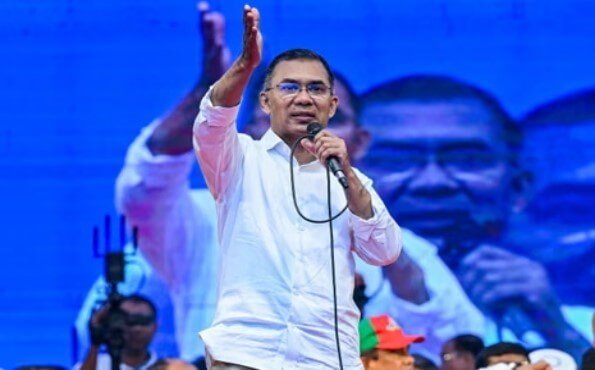
After 17 years in exile in London, Tarique Rahman has returned to Bangladesh as the leading contender to become the country’s next prime minister. The son of former President Ziaur Rahman and former Prime Minister Khaleda Zia, Rahman now leads the Bangladesh Nationalist Party (BNP) at a pivotal moment in the nation’s political history.
Rahman came back to Bangladesh on Christmas Day, ending nearly two decades abroad. His return coincided with the country’s first widely regarded free and fair election in almost 17 years. Speaking before polls opened, Rahman pledged to end entrenched corruption and place Bangladesh on what he called a “new path.” He promised a “top-down, zero-tolerance” approach to graft if the BNP is voted into power.
According to opinion polls, the BNP is expected to secure a sizeable majority, potentially returning to power after nearly two decades. Rahman, now 60, described the election as taking place at a “challenging but pivotal” time for Bangladesh, a country that has long struggled with corruption and democratic backsliding.
The vote follows dramatic political upheaval. In the summer of 2024, a student-led uprising toppled Prime Minister Sheikh Hasina after 15 years in power. The protests were met with a violent state crackdown that left an estimated 1,400 people dead, according to the United Nations. Hasina later went into exile in India and was subsequently convicted in absentia of crimes against humanity related to the final days of her rule.
For the past three elections, Hasina’s Awami League had faced accusations of vote rigging and suppressing opposition voices, including imprisoning thousands of BNP leaders and activists. Since August 2024, an interim government led by Nobel laureate Muhammad Yunus has overseen efforts to restore democratic processes and prepare for credible elections. Despite these efforts, the country has faced economic stagnation and declining law and order.
With 127 million registered voters, security remains tight. More than 900,000 police, army, and security personnel were deployed nationwide on polling day. Analysts have stressed that a peaceful and credible vote is essential for restoring confidence in Bangladesh’s democratic institutions.
Rahman inherited leadership of the BNP from his mother, Khaleda Zia, a towering figure in Bangladeshi politics and longtime rival of Hasina. She died just days after Rahman’s return home. Although Rahman held no formal government post during the BNP’s last term in power from 2001 to 2006, he was widely perceived as influential behind the scenes.
His political career has been marked by controversy. In 2007, during an anti-corruption drive led by a military-backed caretaker government, Rahman was jailed on corruption charges, which he denies. He was released in 2008 to seek medical treatment in London, claiming he had been severely tortured in custody. During Hasina’s rule, he was convicted in multiple cases, which he maintained were politically motivated. Following her removal from power, the courts overturned his convictions, clearing the way for his return.
Critics argue that Rahman represents a continuation of dynastic politics. Both his parents served as prime minister, and many Bangladeshis had hoped the 2024 uprising would end decades of dominance by two rival political families. Rahman has acknowledged past “mistakes” by the BNP but insists the party has learned from them.
Even if the BNP wins decisively, challenges loom. The resurgence of the Islamist party Jamaat-e-Islami, previously banned under Hasina, could complicate the political landscape. Human rights groups have raised concerns over increasing moral policing and hardline rhetoric from some Islamist factions. Rahman has dismissed extremism as a byproduct of years of suppressed political expression, arguing that strengthening democracy and creating economic opportunities will reduce radicalism.
Rebuilding relations with neighboring India will also test any new government. Under Hasina, Bangladesh maintained close ties with New Delhi, but relations have cooled since her departure. Rahman has called for a relationship based on “mutual respect and understanding,” though he remained cautious when asked whether ties could fully normalize while India continues to host Hasina.
About The Author