MQM-P Rejects Bilawal’s Bloodshed Warning
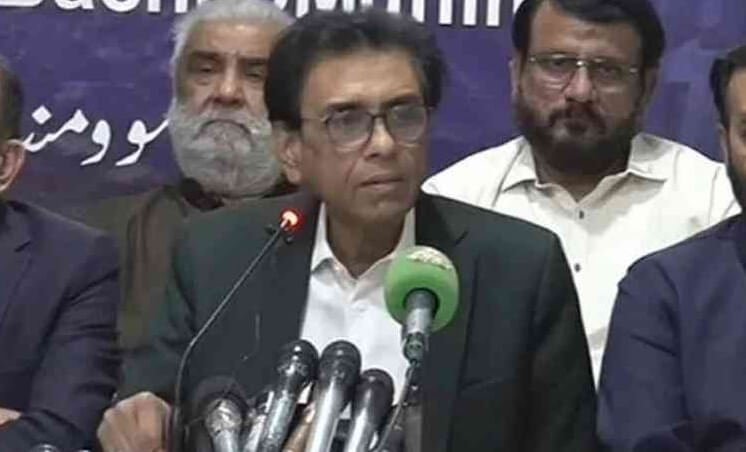
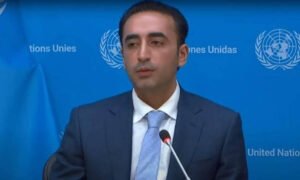
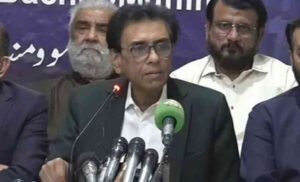
KARACHI: Muttahida Qaumi Movement-Pakistan (MQM-P) Chairman Dr Khalid Maqbool Siddiqui has strongly reacted to Pakistan Peoples Party (PPP) Chairman Bilawal Bhutto-Zardari’s warning of possible bloodshed over the creation of new provinces, saying that the demand for administrative restructuring should be addressed through political debate rather than threats.
Responding to Bilawal’s recent remarks about the possible division of Sindh, Khalid Maqbool Siddiqui said the debate over new provinces was no longer limited to urban Sindh, as people across Pakistan were now discussing the need for administrative restructuring.
“An issue that was once discussed in urban Sindh is now being debated across the country,” he said, adding that provinces, like districts and divisions, were administrative units.
The MQM-P chairman argued that provinces were increasingly functioning as states rather than administrative units, raising questions about governance, public representation and the distribution of resources.
Khalid Maqbool Says Urban Sindh Is Not Anyone’s Property
Siddiqui rejected what he described as attempts to treat urban Sindh as the property of a particular political group, saying its people were neither anyone’s subjects nor slaves.
“Urban areas of Sindh are neither anyone’s estate nor will we allow them to become one,” he said.
He questioned the repeated increase in Karachi’s districts in relation to population and asked who had been responsible for making decisions about the city’s administrative boundaries.
Clarifying his party’s position, Siddiqui said MQM-P had raised the demand for a Karachi province rather than a separate province on the basis of the Muhajir identity.
He maintained that people who had contributed to the creation of Pakistan could not be treated as subordinate citizens and urged political leaders to exercise caution while making statements about urban Sindh.
MQM-P Chief Responds to Bilawal’s Bloodshed Remarks
Reacting to Bilawal Bhutto-Zardari’s warning that forcibly dividing Sindh could lead to bloodshed, Siddiqui questioned why the demand for new provinces should result in violence when the issue was being discussed across the country.
“If there is a demand for provinces throughout Pakistan, why should there be bloodshed?” he asked.
He further said that an argument should be answered with another argument rather than a threat.
Referring to Bilawal’s remarks, the MQM-P chairman questioned whether political leaders intended to bring violence to urban Sindh and invoked the name of Lyari gang leader Uzair Baloch while raising concerns about the possibility of bloodshed.
Siddiqui also urged Bilawal to reconsider his choice of words and avoid language that could further intensify political tensions.
Siddiqui Questions PPP’s Governance in Sindh
The MQM-P chairman also criticised the PPP’s political and governance record, questioning its continued hold over power in Sindh and the country’s political system.
He alleged that the PPP had governed Sindh for decades through what he described as an artificial majority and argued that feudal politics thrived on inequality and coercion.
Questioning the concentration of political power among a limited number of families, Siddiqui asked whether Pakistan’s political future would continue to be shaped by hereditary politics and a small group of influential families.
He also described the PPP as an ethnically based political party and said its leadership should act as national leaders rather than focus exclusively on Sindh’s political interests.
“You are the rulers of Sindh, but you are not the rulers of the entire country,” he said, challenging the PPP leadership to adopt a broader national approach.
Poverty and Education Also Under Spotlight
Siddiqui also raised questions about poverty and education across Pakistan, claiming that poverty had declined in three of the country’s four provinces while increasing in the wealthiest province during the previous year.
He further questioned the relationship between the number of schools and literacy rates, saying areas with a higher number of schools had recorded lower literacy levels.
The MQM-P chairman argued that governance and administrative reforms should focus on improving public services, reducing inequality and ensuring effective representation.
He concluded by urging political leaders to move beyond confrontational statements and address the demand for administrative restructuring through political and democratic debate.
About The Author