Iran Threatens Oil and AI Facilities Across Seven Gulf Countries
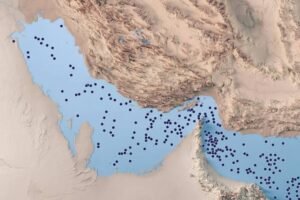
Iran has threatened to target oil facilities, undersea cables, data centres and artificial intelligence infrastructure across as many as seven Gulf countries if the United States and Israel launch fresh attacks, the US and UK media said.
Mohsen Rezaei, secretary of Iran’s Supreme National Security Council, reportedly warned that Tehran would expand its response if another war breaks out. He indicated that Iran’s strategy would extend beyond conventional military targets to include infrastructure linked to the regional economy.
The warning comes amid growing fears that diplomatic efforts between Washington and Tehran could collapse, triggering another round of military confrontation.
Iranian officials have also warned that any new conflict could spread across a wider geographical area and last longer than the United States and Israel expect.
Iran Warns of ‘Zero Red Lines’
Mehdi Mohammadi, an adviser to Iranian parliamentary speaker Mohammad Ghalibaf, said Tehran viewed another conflict as an existential threat.
He claimed that US President Donald Trump and Israeli Prime Minister Benjamin Netanyahu had agreed in principle on a new attack, although he questioned whether such an operation could achieve its objectives.
“We see the next conflict as an existential threat,” Mohammadi said, describing Iran’s approach as having “zero red lines.”
He also warned that a new war would extend beyond the immediate battlefield, potentially affecting a wider region and disrupting economic activity.
However, the reported claims about an agreed US-Israeli attack have not been independently established.
Oil Facilities and AI Data Centres Could Become Targets
Iran’s latest threats highlight the growing importance of civilian and commercial infrastructure in modern warfare.
According to Iranian media reports, potential targets could include oil installations, undersea communications cables, data centres and artificial intelligence facilities.
Rezaei reportedly argued that Iran would not accept a situation in which its own economic infrastructure faced attacks while facilities supporting military operations against it remained untouched.
Such threats raise concerns about the vulnerability of Gulf energy supplies and the digital infrastructure that supports financial services, cloud computing and AI systems.
An attack on major data centres or undersea cables could disrupt internet connectivity, business operations and communications across multiple countries. Similarly, damage to oil infrastructure could affect global energy markets.
The threats remain statements of intent, rather than confirmation that attacks on these facilities have taken place.
US and Israel Reportedly Prepare for Possible New Attacks
Reports in US media suggest that American military planners have prepared potential targets for a renewed joint operation against Iran.
The reported target list includes missile facilities, oil installations and nuclear sites. However, the timing and final scope of any operation remain uncertain.
The heightened tensions have coincided with joint US-Israeli military exercises and reports of increased Israeli military activity near Iran.
Israeli Prime Minister Benjamin Netanyahu reportedly met US Defence Secretary Pete Hegseth in Israel to discuss a possible joint attack and its strategic and political implications.
Meanwhile, reports suggest Washington is strengthening its military presence in the Middle East, with additional aircraft carriers, fighter jets, marines and special operations forces expected in the region.
These developments have fuelled speculation about a possible escalation in November. Nevertheless, military preparations do not necessarily mean that a final decision to attack has been made.
Regional Powers Prepare for Diplomatic Talks
As tensions rise, foreign ministers from several countries are expected to meet in Istanbul to discuss the Iranian, Yemeni and Palestinian crises.
The planned meeting includes representatives from European countries, Turkey, Saudi Arabia, Pakistan and Egypt.
Diplomatic efforts are aimed at addressing interconnected regional conflicts and reducing the risk of further escalation.
However, the growing military preparations and increasingly forceful statements from Washington, Tel Aviv and Tehran have raised doubts about whether negotiations can prevent another confrontation.
About The Author