Pakistan’s Engineering Graduates Lack Job Readiness
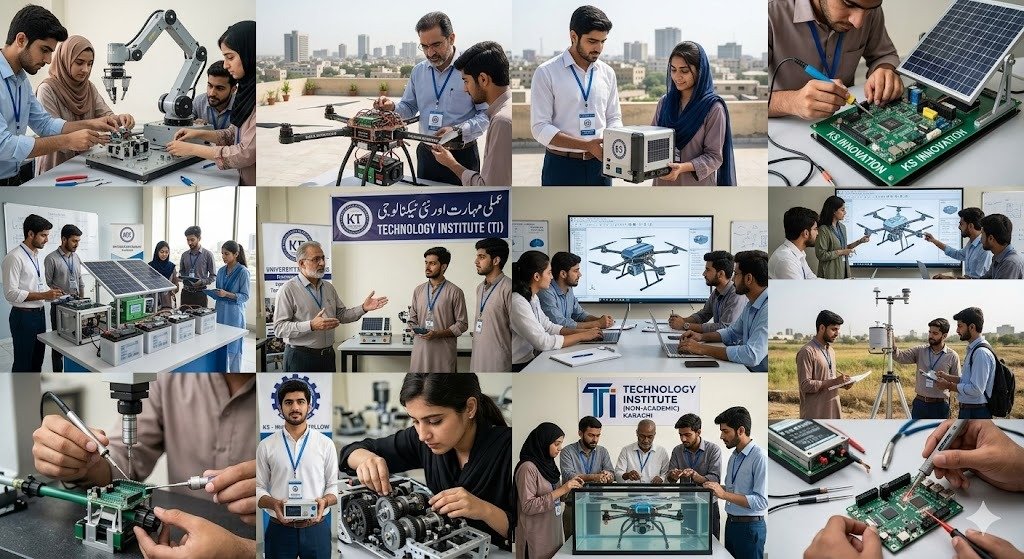
Muhammad Abbas Sajid has been hiring engineers for more than forty years. In every interview, he asks the same questions—not about thermodynamics or fluid mechanics, but about simpler, practical matters: Can you read a site drawing? Can you communicate with a client? Tell me about a problem you faced on a project and how you handled it.
In four decades, he has rarely been impressed by the answers.
Sajid is the founder and CEO of Engineering Services Pvt. Ltd., one of Pakistan’s leading MEP contracting firms, established in 1984. He also serves on the Industrial Advisory Board of NED University of Engineering and Technology. For years, he has worked to bridge the gap between Pakistan’s universities and its industries. According to him, that gap continues to widen.
“The readiness gap has unfortunately widened over the past decade,” he said. “While students today are more technologically aware, many lack practical engineering experience, communication skills, and the ability to solve problems in real-world situations.”
The data supports his concern. A 2024 review by the Pakistan Institute of Development Economics found that more than 31 percent of young graduates remain unemployed, with postgraduate degree holders among the most affected. A February 2026 report further revealed that 64 percent of graduates face employment difficulties specifically because of skill gaps.
Pakistan spends just 1.9 percent of its GDP on education—one of the lowest rates in the region—while nearly 800,000 university graduates enter a job market that often does not demand the skills they were taught.
Pakistan’s pharmaceutical manufacturing sector reflects the same troubling trend. According to Mohammad Hameed Khan, Head of Engineering and Products at a leading pharmaceutical facility, the three biggest weaknesses among fresh engineering graduates are not related to academic grades. The first is practical troubleshooting — diagnosing real problems in live machinery rather than textbook examples. The second is technical communication, such as writing clear reports or explaining technical issues to non-engineers. The third, and most critical, is the inability to apply safety protocols properly in real industrial environments. As Khan explained, “They may know the theory, but knowing and doing are two very different things on a production floor.”
One of the most costly mistakes he has observed is the miscalibration of equipment, which can halt production or damage expensive machinery. According to him, the root cause is usually the same: graduates lack hands-on experience with industrial tools. “They underestimate tolerances and overlook small details,” he said. “These are things you only learn through practice.” His proposed solution is to replace heavily theoretical coursework with project-based learning connected to real industrial challenges. He pointed to National University of Technology as a successful example because of its applied engineering approach and close collaboration with industry.
The issue extends beyond pharmaceuticals. Aqeel Mohsin, Head of Engineering at a major textile manufacturing firm, explained that every fresh graduate entering their Management Trainee Officer programme requires six to ten months of supervised training before becoming capable of handling independent responsibilities. According to him, this is not a luxury but a necessity because universities are not adequately preparing students for practical engineering work.
Mohsin believes the problem begins with the faculty itself. Many teachers lack industry exposure and therefore cannot effectively teach practical applications. A professor who has never calibrated industrial equipment cannot properly train students to do so, while a lecturer unfamiliar with standard operating procedures cannot explain the importance of documentation in live production environments. His solution is to train teachers first by exposing them to real industrial settings and encouraging teaching through case studies, real instruments, and industry-based scenarios.
Not all engineers, however, share the same level of concern. Agha Shuja, a chemical engineer educated at the University of Illinois Urbana-Champaign, offers a more optimistic perspective. Having worked at Merck and Moderna, and now contributing to vaccine localisation efforts at the Dow Institute of Life Sciences, he believes the learning gap is beginning to narrow because technology has transformed how graduates access information. “Fresh graduates think engineering is about solving equations,” he said. “In reality, it is about solving problems with and through people.”
Shuja argues that artificial intelligence and digital tools now allow graduates to access technical knowledge far more quickly than before. The challenge is no longer finding information but applying it effectively in real situations. He is also hesitant to place all the blame on graduates. During his own time at Merck, he underwent three months of intensive training before entering the core facility. In his view, when graduates make mistakes, companies must also examine the quality of their onboarding and training systems.
Regulatory bodies have begun responding to these concerns. The Pakistan Engineering Council has introduced the Pathway to Practice programme to place fresh graduates in industry, acknowledging that a degree alone is insufficient. Similarly, the Higher Education Commission has started piloting updated educational frameworks at selected universities. However, industry leaders like Hameed Khan believe progress remains slow due to rigid university curricula and weak collaboration between academia and industry.
Shuja suggests adopting models he observed abroad, where companies such as Intel established fabrication labs on university campuses and research directly led to industrial startups. He believes universities in Pakistan must build stronger partnerships with industry so talented engineers can innovate locally rather than seeking opportunities abroad.
Ultimately, all the voices in this discussion — from industry veterans to internationally experienced engineers — agree on one central point: the debate is not about blaming graduates. It is about reforming engineering education, strengthening industry collaboration, and preparing students with the practical skills needed to succeed in real-world engineering environments.
About The Author