3rd US Carrier Heads to Mideast as Iran Tensions Rise
WASHINGTON: The United States is deploying roughly 9,000 additional troops aboard a group of ships to the Middle East as President Donald Trump weighs the possibility of launching new strikes against Iran.
A US official said Thursday that the deployment includes a third aircraft carrier and would significantly bolster the American military presence in the region amid growing uncertainty over the future course of the conflict, foreign media reported.
The move comes as Trump has again warned that further military action against Iran remains possible, including a potential escalation after the November 3 US midterm elections.
The president has also suggested that Iran may have links to a recent incident involving a FlyDubai flight in which a co-pilot allegedly stabbed the captain and attempted to crash an Israel-bound aircraft.
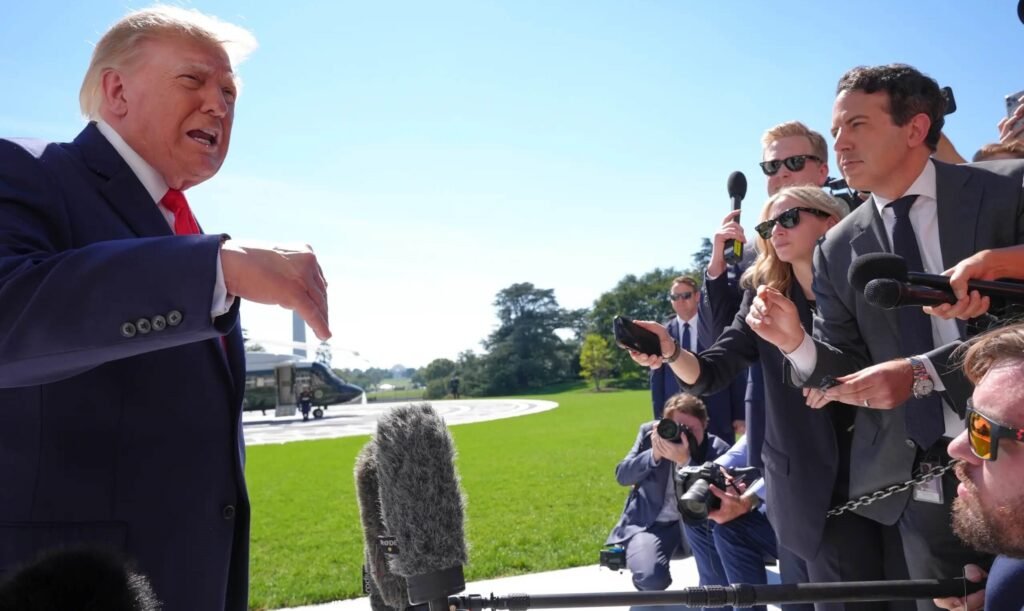
Asked at the White House whether there was a connection between the suspect and Tehran, Trump said, “I would say the answer, based on what I’m hearing, is ‘yes,’” while adding that US authorities were still investigating.
Trump warned that Washington would respond if Iran’s involvement was established. “They’ll be hit very hard,” Trump told reporters, without providing details of what action the United States might take.
Thousands of US sailors and Marines heading to region
The group of US ships heading toward the Middle East is carrying more than 7,000 sailors and about 2,000 Marines.
The deployment includes the USS Theodore Roosevelt carrier strike group, accompanied by the cruiser USS Chosin, as well as the USS Makin Island amphibious readiness group, which includes the amphibious landing ships USS John P. Murtha and USS Anchorage.
According to a US official who spoke on condition of anonymity because of the sensitivity of military operations, the deployment could result in three US aircraft carriers being in the Middle East as early as the end of October.
With forces already stationed in the region, the deployment could bring the number of US sailors and Marines in the Middle East to more than 20,000, supported by hundreds of aircraft.
The US Navy previously had three carrier strike groups operating in the Middle East in April, marking the first time since 2003 that such a concentration of carriers had been deployed in the region.
The USS George H.W. Bush and USS George Washington are currently in the region, along with the USS Boxer amphibious readiness group.
The George Washington, normally deployed in the Pacific, was moved to the Middle East to relieve the USS Abraham Lincoln, whose previous deployment kept its crew at sea for more than 260 consecutive days.
Trump says further strikes remain possible
Trump also discussed the possibility of further military action against Iran in an interview with Time magazine published Thursday.
Asked whether the United States could intensify its bombing campaign after the November 3 elections, Trump said it was “possible,” but declined to provide details about potential targets or military plans.
Trump said he rejected Iran’s latest ceasefire proposal because it did not meet his requirements.
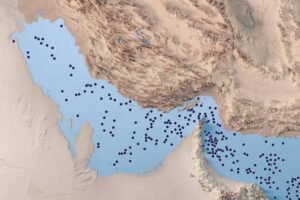
He specifically referred to an Iranian offer to “open up” the Strait of Hormuz, one of the world’s most important energy shipping routes, but said the broader proposal was “not good enough.”
The Strait has become a major focal point of the conflict because of its importance to global oil and gas supplies.
Iran readies harder retaliation if attacked as diplomacy faces long odds
Iran is preparing a broader and more forceful response if the United States resumes large-scale military attacks, sources said, while continuing a diplomatic push that Iranian officials privately see as unlikely to succeed.
The planning reflects a conviction within Iran’s leadership that any renewed US campaign must be met with a stronger response than before, even as Tehran seeks to avert escalation through talks.
Senior commanders are reviewing plans to expand potential targets beyond US-linked assets to countries that support US military operations and possibly to locations outside the Middle East, according to three senior Iranian officials and an insider familiar with the discussions.
Since President Masoud Pezeshkian returned from New York last week, commanders and senior officials have focused on the scope and timing of any response if Washington strikes again.
No final decision has been made, but planning has intensified as neither side shows signs of willingness to compromise.
The deliberations follow seven months of conflict that began with US-Israeli attacks on February 28. Although an April 8 ceasefire ended the 40-day war, hostilities have continued sporadically since then.
About The Author