Houthis Strike Saudi Oil Facilities as Yemen Conflict Escalates
Saudi Arabia’s Jazan refinery and Ras Tanura oil complex have come under attack, raising concerns over regional oil supplies as crude prices edge higher.
Saudi Arabia and Yemen’s Iran-backed Houthi rebels have intensified attacks on strategic infrastructure, including oil facilities and ports, escalating tensions across the Middle East and raising fresh concerns over global energy supplies.
A projectile struck an oil refinery in Saudi Arabia’s southwestern Jazan region on Thursday, killing a Nepalese worker and injuring several others, according to the Saudi Ministry of Energy.
The attack sparked a fire and forced the temporary suspension of some operations at the facility, the ministry said.
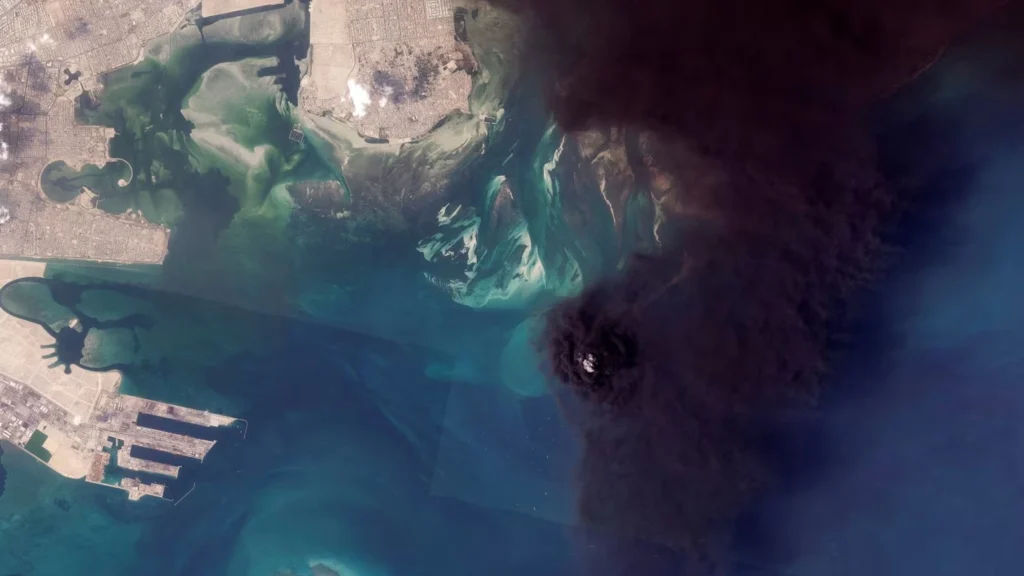
The strike followed a Houthi-claimed attack a day earlier on Saudi Arabia’s Ras Tanura refinery, one of the world’s largest oil export complexes. Satellite imagery captured on Wednesday showed a large plume of black smoke rising from the coastal facility.
The Houthi-controlled armed forces claimed responsibility for the attack, saying it caused a fire at the complex in Saudi Arabia’s Eastern Province.
A shipping source told CNN on Thursday that oil loadings at the terminal had been suspended following the attack, although it remained unclear whether operations had resumed.
The Saudi-led coalition said it intercepted and destroyed four drones over Ras Tanura. Falling debris was reported, but no injuries were confirmed.
Ras Tanura has a refining capacity of 550,000 barrels per day and forms part of a major Saudi energy complex that includes one of the kingdom’s principal crude oil export terminals.
Houthis Target Saudi Economic Infrastructure
The Houthis also claimed responsibility for a Wednesday strike on Riyadh’s King Abdullah Economic City, which Saudi authorities said wounded 11 people.
An eyewitness told CNN that the targeted skyscraper houses the headquarters of Saudi Arabia’s Public Investment Fund (PIF), the kingdom’s trillion-dollar sovereign wealth fund.
The Saudi-led coalition later blamed a Houthi drone for the attack and vowed a firm response.
Saudi-led Coalition Intensifies Strikes in Yemen
Meanwhile, Saudi-led forces have intensified military operations against Houthi-controlled areas of Yemen.
On Thursday, the coalition announced a precision military operation targeting Houthi capabilities, claiming to have destroyed 50 targets across the governorates of Sanaa, Hodeidah and Saada.
A day earlier, the coalition said it had targeted operational capabilities at the Houthi-controlled Hodeidah port, alongside strikes in Saada and Amran governorates.
The Houthi-controlled armed forces claimed that Saudi warplanes and missiles had carried out 109 strikes across Yemen during the preceding 24 hours, including attacks on Sanaa and Hodeidah.
The Houthi-controlled health ministry in Sanaa said at least 19 civilians had been killed and 25 others injured in Saudi strikes over the previous 48 hours.
Oil Prices Rise on Supply Disruption Concerns
Meanwhile, oil prices edged higher on Friday, putting crude benchmarks on track to break a three-week losing streak as attacks on tankers in the Strait of Hormuz and Saudi energy infrastructure heightened concerns about global oil supplies.
Brent crude futures rose 4 cents to $96.61 per barrel by 0450 GMT, after gaining nearly $2 on Thursday to settle at their highest level since November 6.
US West Texas Intermediate (WTI) crude futures traded at $85.78 per barrel, up $2.10, or 2.5%, from Wednesday’s closing price. There was no WTI settlement on Thursday because of the Thanksgiving holiday in the United States.
Oil prices had declined in previous weeks amid expectations that US President Donald Trump would avoid escalating military action against Iran following the midterm elections.
However, continued Iranian attacks on vessels transiting the Strait of Hormuz have disrupted oil exports, while Houthi strikes on Saudi energy infrastructure have added to concerns about supply disruptions across the Middle East.
About The Author