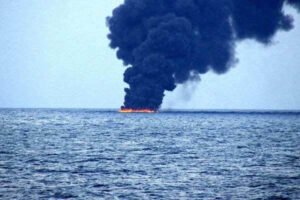
Iran Targets US Military Base in Bahrain With Six-Drone Attack
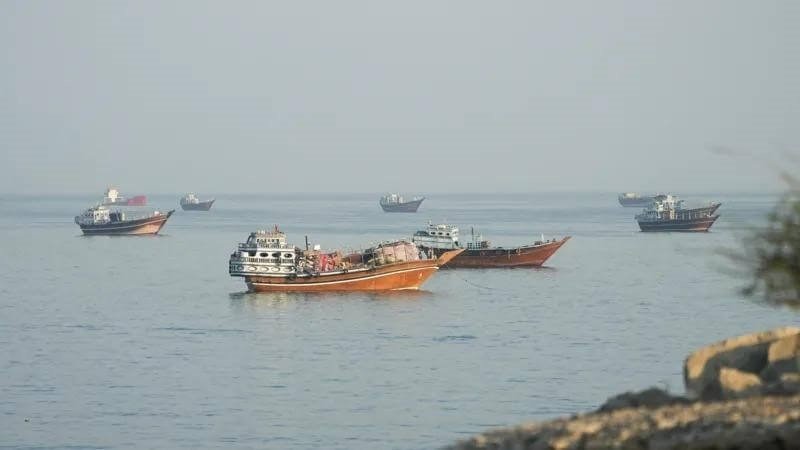
Iran has launched a drone attack targeting a US military air defence radar facility at Al-Riffa Air Base in Bahrain, marking its second reported attempt to strike the Gulf country in three days. Bahrain’s military said its air defence systems intercepted and destroyed the incoming drones.
Iran’s Islamic Revolutionary Guard Corps (IRGC) claimed responsibility for Sunday’s drone attack, stating that six drones were deployed against a US air defence radar facility at Al-Riffa Air Base in Bahrain.
However, Bahrain’s military confirmed that its air defence systems successfully intercepted and destroyed the incoming drones before they could reach their intended targets.
The latest incident follows another Iranian drone attack on Bahrain on Friday, marking an escalation in tensions between Iran and Gulf countries amid the ongoing confrontation with the United States.
As air raid sirens sounded across Bahrain on Sunday, the country’s Interior Ministry urged residents to move to their nearest safe locations.
Meanwhile, Bahrain’s Foreign Ministry strongly condemned the attacks, holding Iran responsible for their consequences.
IRGC Warns US Over Strait of Hormuz
Following the attack, Iran’s Revolutionary Guard issued a warning against further US military action in the region.
In a statement broadcast by Iranian state media, the IRGC declared that the Strait of Hormuz remained closed and warned that any aggression by the United States would trigger a stronger response.
The Strait of Hormuz is one of the world’s most strategically important shipping routes. Approximately one-fifth of global oil and gas supplies normally pass through this narrow waterway.
However, shipping activity has been severely disrupted since the outbreak of the conflict in February.
Iran has insisted on maintaining control over the strait and has targeted vessels it considers unauthorized. In response, the US military has been providing protection for oil tankers travelling through the region to maintain energy exports from Gulf Arab states.
US Denies Iranian Claims of Radar System Destruction
Earlier this week, the IRGC claimed that it had successfully struck a US early-warning radar system in Bahrain during Friday’s attack.
However, the US military rejected the claim, stating that Iranian forces had launched two one-way attack drones toward Bahrain and that both were intercepted by US forces.
According to the US military, the incident resulted in no injuries or damage.
The conflicting statements highlight the growing information battle surrounding military operations in the Gulf region.
US Carries Out Strikes on Iran’s Qeshm Island
Tensions escalated further after the United States conducted limited strikes on Iran’s Qeshm Island, located near the Strait of Hormuz.
US officials told CBS News, the BBC’s US media partner, that the strikes were defensive and carried out in response to the IRGC firing on a US aircraft.
Iran’s state news agency IRNA also reported explosions on Qeshm Island on Monday.
Although the IRGC did not comment directly on the reported US strikes, it claimed that Iranian forces had shot down two US MQM-170 drones south of the island and an MQ-9 drone east of the Strait of Hormuz.
Iran and US Face Growing Challenges Over Peace Agreement
The latest attacks come amid continuing uncertainty over diplomatic efforts to end the conflict between Washington and Tehran.
The United States and Iran reportedly reached a preliminary agreement in June to end the war and reopen the Strait of Hormuz. However, the agreement collapsed within weeks after attacks on commercial shipping resumed and Washington reinstated its naval blockade of Iranian ports.
Iranian negotiators have reportedly been discussing a proposal with regional mediators that could reopen the Strait of Hormuz within two days if Washington agrees to seven conditions.
These conditions reportedly include lifting the naval blockade and releasing frozen Iranian assets.
However, US President Donald Trump recently indicated that Washington was no longer interested in pursuing an agreement to end the conflict.
Trump also directed Vice-President JD Vance, who had been involved in diplomatic efforts, to shift his attention toward domestic US politics.
What Happens Next?
With Iran continuing to threaten US interests in the Gulf and Washington maintaining its military presence around the Strait of Hormuz, the risk of further escalation remains significant.
The latest drone attack in Bahrain highlights the growing regional security challenges and the importance of the Strait of Hormuz to global energy markets.
Whether diplomatic negotiations can resume or military tensions will intensify further remains uncertain.
About The Author