Petrol Levy Cut Leaves Refineries Facing Rs15bn Monthly Burden
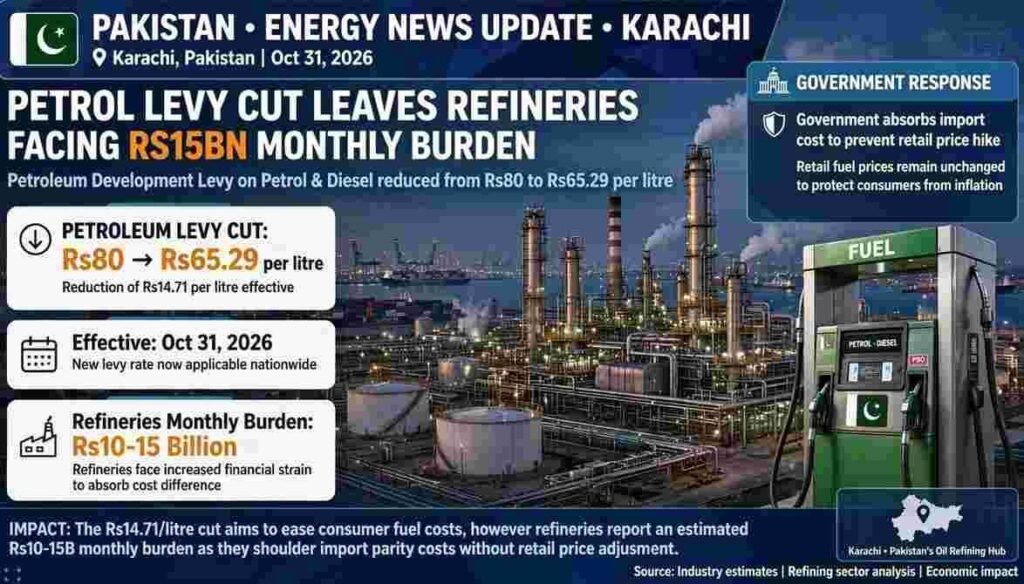
Petroleum Development Levy on Petrol and Diesel has been reduced from Rs80 to Rs65.29 per litre
KARACHI: The government has reduced the petroleum levy on petrol to prevent an increase in retail prices, shifting the financial impact of higher import costs to local refineries
According to the latest petroleum pricing notification dated October 31, 2026, petroleum levy has been reduced from Rs80 to Rs65.29 per litre.
Under the revised pricing mechanism, the petroleum levy has been reduced to allowing government to absorb an increase in petrol import costs without passing it on to consumers.
However, the move could place a significant financial burden on domestic refineries, with preliminary estimates suggesting monthly losses of Rs10 billion to Rs15 billion.
Higher Petrol Import Costs Push Up Prices
The increase in petrol import premiums, including freight charges, has raised the cost of petrol by approximately Rs14.71 per litre, the analyst at topline said.
The import premium increased from $19.88 to $25.52 per barrel, putting additional pressure on the country’s petroleum pricing structure.
Instead of allowing the higher cost to translate into increased petrol prices at fuel stations, the government reduced the petroleum levy to offset the increase.
As a result, consumers have been protected from an immediate petrol price hike, while local refineries are expected to bear the additional financial impact under the revised arrangement.
Local Refineries Face Rs10-15 Billion Monthly Burden
Pakistan’s local refineries account for approximately 30% of the country’s total motor spirit (MS) supply.
According to preliminary estimates, the revised pricing arrangement could impose a financial burden of Rs10 billion to Rs15 billion per month on domestic refineries.
The estimate is based on assumed annual motor spirit production of approximately 2.6 million tonnes.
However, the financial impact remains preliminary and requires further confirmation from refinery operators.
Govt’s Petrol Price Decision Raises Refinery Concerns
The government’s decision aims to protect consumers from rising international petrol costs. However, the arrangement has raised concerns about its impact on the financial health of local refineries.
The refineries are being approached to confirm the actual financial implications of the revised pricing mechanism.
Further details are expected once consultations with refinery operators are completed.
The development highlights the challenge of balancing consumer relief with the financial sustainability of Pakistan’s domestic petroleum refining industry.
About The Author