Three Tankers Hit in Strait of Hormuz as Iranian Attacks
Three tankers have been struck in the Strait of Hormuz since Friday, raising fresh concerns over maritime security as attacks on commercial vessels in the region reach their highest levels since the Iran war began, CNN reported.
According to maritime risk management company Marisks, projectiles hit three oil and chemical tankers attempting to exit the strategic waterway on Friday and Saturday. Although responsibility for the attacks has not been confirmed, Marisks assessed Iranian involvement as likely.
The latest incidents highlight growing risks to international shipping and global energy supplies as tensions between Iran and the United States continue.
Three Tankers Targeted in Separate Attacks
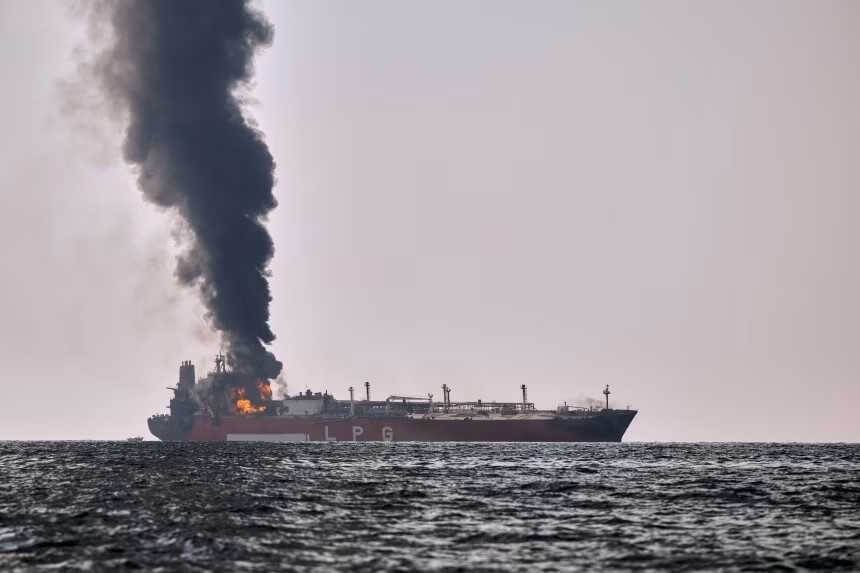
The first incident involved the Captain Leon, a Marshall Islands-flagged chemical and oil tanker. The vessel was struck near its bow at approximately 3 p.m. UTC on Friday, triggering a fire. However, all crew members were reported safe, according to Marisks.
On Saturday, the Hong Kong-flagged crude oil tanker Torkel was hit near its stern at around 5 a.m. UTC. The impact caused a fire aboard the vessel.
Less than an hour later, another Hong Kong-flagged tanker, the Arina, was struck by a missile in its engine room.
Marisks warned that commercial shipping continues to face a critical threat in the region, particularly along the southern corridor near Oman’s coastline, which Iran strongly opposes.
Shipping Attacks Reach Highest Levels Since Iran War Began
Meanwhile, maritime security data indicates that attacks on commercial vessels in and around the Strait of Hormuz have increased significantly.
According to data from the United Kingdom Maritime Trade Operations Centre (UKMTO), reported attacks exceeded 30 in October, marking the highest monthly total since the US-Iran war began in late February.
Furthermore, at least 22 attacks had been reported in November as of Sunday, making it the second-highest monthly figure since the conflict started.
However, the actual number of incidents could be considerably higher. UKMTO has acknowledged that several attacks remain unverified because some vessels have not reported incidents to maritime authorities.
In its recent assessment, the organization said it was struggling to establish the true number of attacks, as many targeted vessels were refusing to report incidents.
Some commercial ships are also believed to have switched off their tracking systems to avoid detection while navigating the dangerous waterway.
Strait of Hormuz Remains a Critical Shipping Route
The Strait of Hormuz is one of the world’s most important energy transportation routes. Before the conflict, approximately one-fifth of global oil supplies passed through the narrow waterway.
However, the ongoing conflict has severely disrupted commercial shipping, reduced tanker movements and increased uncertainty in international energy markets. Iran began attempting to restri
About The Author