Tensions Rise as Iran Blocks U.S. Ships in Hormuz
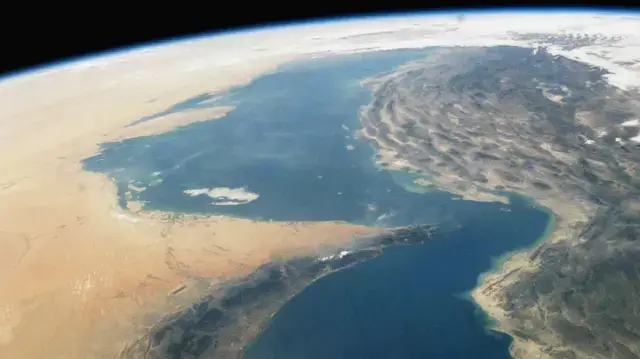
Two missiles struck a U.S. Navy vessel near the port city of Jask after it ignored warnings from Iran’s Islamic Revolutionary Guard Corps
Tensions in the Middle East escalated after Iran’s military claimed it had prevented U.S. Navy vessels from entering the strategically vital Strait of Hormuz.
According to statements carried by Iranian state media, including Tasnim and IRNA, Iran’s naval forces issued a “firm and swift warning” that allegedly forced what it described as “enemy destroyers” referring to U.S. and Israeli ships — to stay out of the waterway. Iranian officials warned that any foreign military presence would face direct confrontation.
Separately, Iran’s Fars News Agency reported that two missiles struck a U.S. Navy vessel near the port city of Jask after it ignored warnings from Iran’s Islamic Revolutionary Guard Corps (IRGC). The report, citing local sources, has not been independently verified, and U.S. officials have yet to confirm any such attack.
The developments come just as U.S. President Donald Trump announced the launch of “Project Freedom,” a military initiative aimed at escorting and guiding commercial vessels stranded in the Strait of Hormuz. The U.S. Central Command (CENTCOM) said the operation would involve approximately 15,000 personnel, supported by more than 100 aircraft, warships, and drones.
CENTCOM emphasized that the mission is intended to restore freedom of navigation and ensure the security, describing it as essential to regional stability. However, Iranian officials have strongly rejected the move, calling it a provocation and warning of military retaliation.
Meanwhile, shipping activity in the Strait appeared significantly reduced. Data from maritime tracking services indicated that only one tanker was transiting the waterway early Monday, highlighting growing concerns among shipping companies amid rising security risks.
Crude Oil Prices
The geopolitical tensions have already impacted global markets, with oil prices surging sharply. Brent crude climbed to around $113-$114 per barrel, while West Texas Intermediate (WTI) rose to approximately $105-$105.60.
In a related development, Iranian media reported that 15 crew members of an Iranian commercial vessel previously seized by the United States had returned to Iran via Pakistan. The ship, which had 21 people on board, is expected to be formally handed back to Iranian authorities.
Iranian officials also reiterated that the country, along with Oman — which shares control of the southern side of the Strait — holds responsibility for maintaining security in the waterway. Oman has not publicly commented on the latest situation.
As of now, there has been no official response from the White House or CENTCOM regarding Iran’s claims of blocking U.S. naval forces or the reported missile strike. The situation remains fluid, with the potential for further escalation in one of the world’s most critical transit chokepoints.
About The Author