Thousands Join India Opposition Protest Against Election Chief
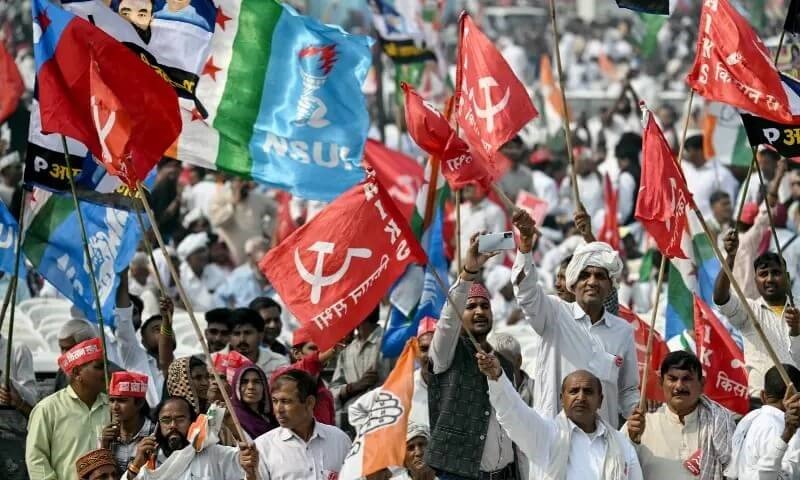
NEW DELHI: Thousands of protesters gathered in India’s capital on Sunday, November 1, demanding the resignation of Chief Election Commissioner Gyanesh Kumar over a controversial revision of voter lists.
The demonstration was led by Rahul Gandhi, a senior Congress Party leader, as opposition parties intensified their campaign against Prime Minister Narendra Modi’s government.
The protesters alleged that the voter list revision favoured Modi’s ruling Bharatiya Janata Party (BJP) and unfairly affected voters from minority communities.
Rahul Gandhi Leads Opposition March in Delhi
Authorities tightened security across central Delhi ahead of the demonstration and announced traffic diversions as protesters prepared to march towards the designated rally venue.
Hundreds of security personnel, equipped with batons and shields, were deployed around the historic Ramlila Maidan. Riot-control vehicles were also stationed in the area.
Opposition leaders joined the march in an open-top jeep, while demonstrators carried Indian national and political party flags.
Addressing the rally, Rahul Gandhi demanded the removal of Chief Election Commissioner Gyanesh Kumar, describing it as an important step towards restoring accountability in the country’s electoral system.
He accused the authorities of undermining citizens’ democratic rights through the voter list revision.
Protesters Demand Accountability Over Voter Deletions
Speaking at the demonstration, Congress student wing member Reena Mahto said four members of her family had been removed from the electoral rolls because they were incorrectly recorded as having moved elsewhere.
Mahto said her family had lived in Jagdalpur, in the central Indian state of Chhattisgarh, for years.
She demanded accountability from election authorities over the alleged errors, saying affected citizens should not lose their voting rights because of incorrect records.
Opposition Questions Removal of 130 Million Voter Names
The voter list revision has reportedly resulted in the removal of more than 130 million names, a figure exceeding Japan’s population.
Opposition parties allege that the deletions disproportionately affected Muslim voters and other minority communities, claiming the exercise could influence the electoral process in favour of the BJP.
The protests have continued for more than a month, creating a major political challenge for Modi’s government.
However, the government remains in power, and India’s next general election is not scheduled until 2029.
The Election Commission’s voter revision exercise has become a major point of confrontation between the ruling BJP and opposition parties.
About The Author