MG JW Opens Bangladesh Market for Pakistani Cars
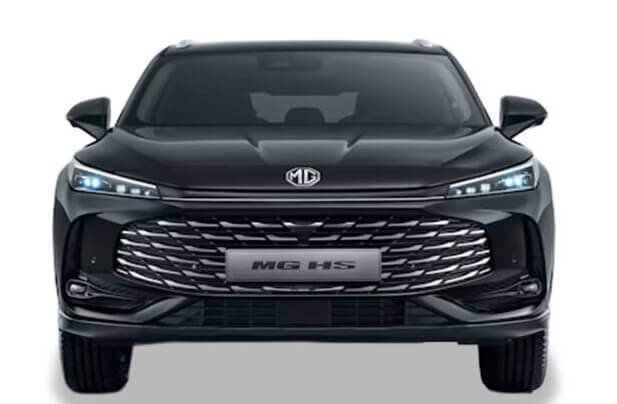
KARACHI: MG JW Automobile Pakistan is set to begin exporting locally assembled vehicles to Bangladesh this month, marking a significant development for Pakistan’s automotive industry and opening a new international market for vehicles manufactured in Pakistan.
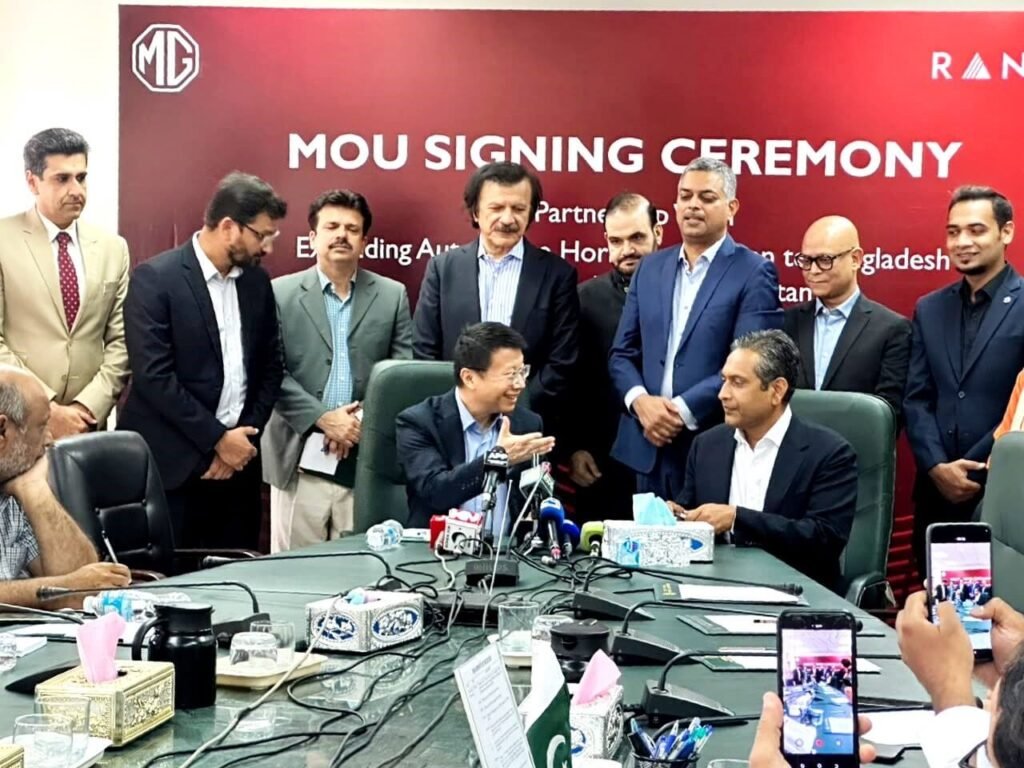
Under an agreement signed with Bangladesh’s RANCON Group, MG JW will initially export 100 vehicles to Bangladesh during 2026 on a trial basis. The company expects the exports to increase significantly in the coming years, with total shipments projected to reach around 5,800 vehicles over the next four years.
SAIC Motor is the Chinese parent/shareholder behind the MG brand and supports MG JW’s operations in Pakistan. MG JW CEO Jianqiang Shao specifically said the company obtained support from SAIC Motor headquarters to change the business model.
The development represents a shift in Pakistan’s automotive export strategy, as locally assembled vehicles will be supplied to an overseas market under a completely knocked down (CKD) model rather than being exported as completely built units (CBUs) from China.
Few weeks back, Special Assistant to the Prime Minister on Industries and Production Haroon Akhtar Khan witnessed the signing ceremony and welcomed the agreement, saying it would help generate millions of dollars in foreign exchange for Pakistan.
“the government was finalising a comprehensive Auto Policy aimed at increasing vehicle exports, improving localisation and strengthening Pakistan’s automotive manufacturing base,” Mr Khan said. Highlighted the progress made by the country’s automotive sector in terms of production capacity and quality, he said, “Pakistani-made vehicles were increasingly capable of competing in international markets.”
The first shipments to Bangladesh are expected to comprise two models produced in Pakistan in partnership with China’s SAIC Motor. The vehicles were previously supplied to the Bangladeshi market from China. However, following discussions with SAIC Motor’s headquarters, MG JW secured support to shift the business model from CBU exports from China to CKD exports from Pakistan.
According to MG Pakistan CEO Jiang Qiang Shao, the shift to CKD exports could provide benefits to both Pakistan and Bangladesh. Under the arrangement, vehicles would be assembled in Bangladesh from parts supplied from Pakistan, allowing the Bangladeshi distributor to potentially reduce import duties compared with importing fully assembled vehicles.
For Pakistan, the arrangement could help establish a more sustainable automotive export business and create opportunities for local manufacturers to increase production and integrate further into international supply chains.
Under the initial arrangement, 100 vehicles will be exported in 2026, beginning in September, while larger-scale commercial exports are expected to commence next year.
RANCON Group Executive Director Muhammad Mostafizur Rashid Bhuiyan said the agreement would bring healthy competition to Bangladesh’s automobile market while giving consumers access to high-quality vehicles produced in Pakistan.
The partnership will also extend beyond the supply of vehicles. MG Pakistan will provide its Bangladeshi partner with technical guidance on vehicle assembly, general assembly operations and quality-control procedures.
A local engineering team from Pakistan is expected to travel to Bangladesh to provide technical assistance and engineering services during the initial phase of the project. This support is intended to help ensure that vehicles assembled in Bangladesh meet the required quality and production standards.
The move is being viewed as an important step in strengthening industrial and trade cooperation between Pakistan and Bangladesh. It could also provide a model for Pakistani automakers seeking to expand into other international markets.
With the first trial shipments scheduled for September, the success of the programme could pave the way for larger-scale exports from Pakistan and contribute to the government’s broader objective of increasing foreign exchange earnings, boosting localisation and developing Pakistan’s automotive sector into a stronger export-oriented industry.
About The Author