SBP Raises Policy Rate by 50 Basis Points to 12%
The MPC maintained that Pakistan real GDP growth projection for 2026-27 at 3.5% to 4.5%
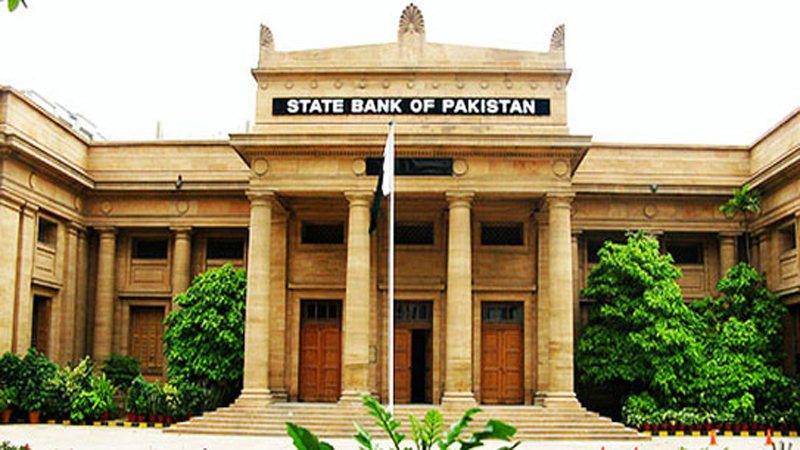
KARACHI: The State Bank of Pakistan (SBP) has raised its policy rate by 50 basis points to 12% from 11.5%, citing rising inflation risks stemming from the intensifying conflict in the Middle East and persistently elevated global energy prices.
The Monetary Policy Committee (MPC) announced the decision on Monday, with nine out of 10 members voting in favour of the increase. The revised policy rate will take effect from October 27, 2026.
In its monetary policy statement, the central bank said geopolitical developments had worsened the inflation outlook compared with its previous assessment, although the impact of the global supply shock on Pakistan’s economy had remained contained so far.
The MPC said the rate hike was necessary to anchor inflation expectations, contain second-round effects of the ongoing supply shock and bring inflation within the target range of 5% to 7% over the medium term.
The committee noted that the external account and economic growth outlook remained broadly unchanged, but risks had increased due to the intensification of the Middle East conflict and uncertainty over its near-term resolution.
Inflation outlook deteriorates
The SBP said headline inflation rose to 10.3% year-on-year in September, exceeding the MPC’s expectations. Higher energy and wheat prices, along with the prices of related products, contributed significantly to the increase.
Core inflation also remained elevated at around 8.4%, indicating persistent underlying price pressures.
The central bank warned that sustained increases in food and energy prices could push inflation expectations higher and eventually feed into core inflation.
It identified geopolitical tensions, global commodity price volatility, unexpected adjustments in energy tariffs, further increases in wheat prices and adverse weather conditions as key risks to the inflation outlook.
The MPC said maintaining an adequately positive real policy rate on a forward-looking basis was important to bring inflation within the target range over the medium term.
Economic recovery continues
The central bank said economic activity had started to recover gradually compared with the fourth quarter of fiscal year 2026.
Large-scale manufacturing (LSM) output grew by 1.9% year-on-year during July and August of FY27, compared with marginal growth of 0.4% in the fourth quarter of FY26.
Other high-frequency indicators, including cement and petroleum, oil and lubricants (POL) sales, private-sector credit and the Purchasing Managers’ Index, also pointed to a recovery in economic activity.
The SBP said satellite imagery of nighttime lights and nitrogen dioxide (NO2) emissions supported the assessment of improving economic activity.
The initial official estimates for Kharif crops also exceeded expectations, improving the outlook for the agriculture sector.
Indicators related to the services sector, including information and communication technology (ICT) exports, import volumes and business confidence among services firms, suggested gradually improving prospects.
The MPC maintained its real GDP growth projection for 2026-27 at 3.5% to 4.5%. However, it warned that further escalation of the Middle East conflict and adverse climate events amid worsening El Niño conditions could threaten the outlook.
Current account deficit reaches $874 million
Pakistan recorded a current account deficit of $874 million during the first quarter of 2026-27, according to the central bank.
The SBP said exports were recovering, supported by rice, high-value-added textile products and services exports. Workers’ remittances also remained resilient and were projected to exceed the central bank’s earlier assessment.
However, imports increased sharply, led by non-energy products, amid recovering economic activity and higher prices.
Based on these developments, the SBP expects the current account deficit to remain within its earlier projected range of 0% to 1% of GDP during FY27.
The central bank said the current account outlook, together with higher financial inflows, was expected to help increase foreign exchange reserves beyond their current level.
However, elevated global commodity prices, tighter international financial conditions and supply constraints remained key risks.
The SBP’s foreign exchange reserves stood at around $21.5 billion, equivalent to approximately three months of import cover, supported by continued foreign exchange purchases.
The MPC also noted that Pakistan had reached a staff-level agreement with the International Monetary Fund (IMF).
Fiscal performance and tax collection
The central bank said the Federal Board of Revenue (FBR) recorded 7% year-on-year growth in tax collection during the first quarter of FY27, exceeding its target by Rs33 billion.
The transfer of substantial SBP profits and contained government expenditures were expected to keep both the overall fiscal balance and the primary balance in surplus during the quarter.
However, the MPC cautioned that the intensifying Middle East conflict had made fiscal management more challenging.
It stressed the need for sustained efforts to strengthen fiscal discipline, broaden the tax base, improve revenue mobilisation and accelerate structural reforms.
The committee reiterated that prudent fiscal management was essential to preserving macroeconomic stability.
Global monetary tightening adds pressure
The MPC also noted that major central banks had raised interest rates in response to mounting inflationary pressures, while the IMF had revised its global inflation projections upward.
Against this backdrop, the committee emphasised the importance of strengthening Pakistan’s external and fiscal buffers to improve the economy’s resilience to recurring global supply shocks.
It said a prudent combination of monetary and fiscal policies, alongside the timely implementation of structural reforms, would remain essential for achieving sustainable economic growth.
The SBP said preserving macroeconomic stability was necessary to support long-term growth while bringing inflation back within the target range of 5% to 7%.
About The Author